Passion Flower Vine
Botanical Name: Passiflora caerulea
Passion Flower vine is immediately recognizable by its big, spectacular blooms that appear in late summer and fall.
Those unusual blue and white flowers are about 4-6 inches (10-15 cm) across. Five petals, five sepals, and fine violet-blue filaments surround prominent green anthers, making passion flowers among the most extraordinary and exotic-looking you'll find anywhere.
After a long, hot growing season outdoors, the flowers are followed by small yellow or orange egg-shaped fruits that are edible but full of seeds. But don't expect it to bear fruit indoors.
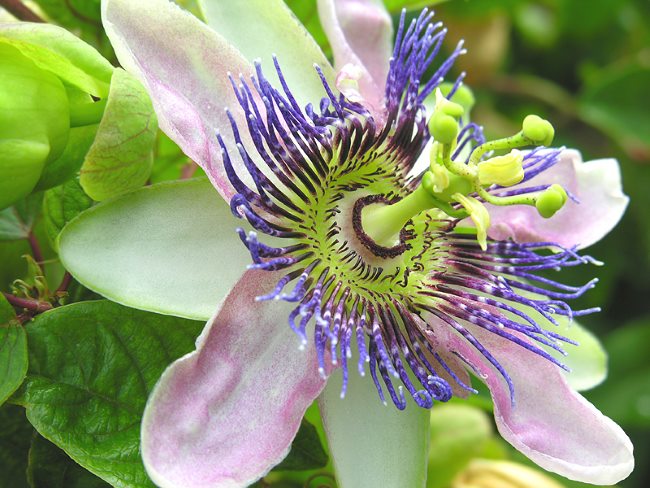
A few Passion Flower facts will help you know and grow this plant.
It is native to the South American rain forests where it clings to the trunks of trees using its tendrils.
Indoors, this tropical plant needs warmth, direct sun and humidity to grow well. Because of its need for full sun and high humidity, it can be somewhat difficult to please in a home and will grow best in a greenhouse.
Train Vines on a Trellis or Hoop
Those fast-growing, vigorously climbing vines are thickly covered with lobed dark-green leaves.
To show off its leafy vines, and to give them a denser appearance, loop them around a wire hoop or trellis and tie loosely with florists wire. You can trim vines as you go. Pruning passion flower vine does no harm and will help keep it under control.
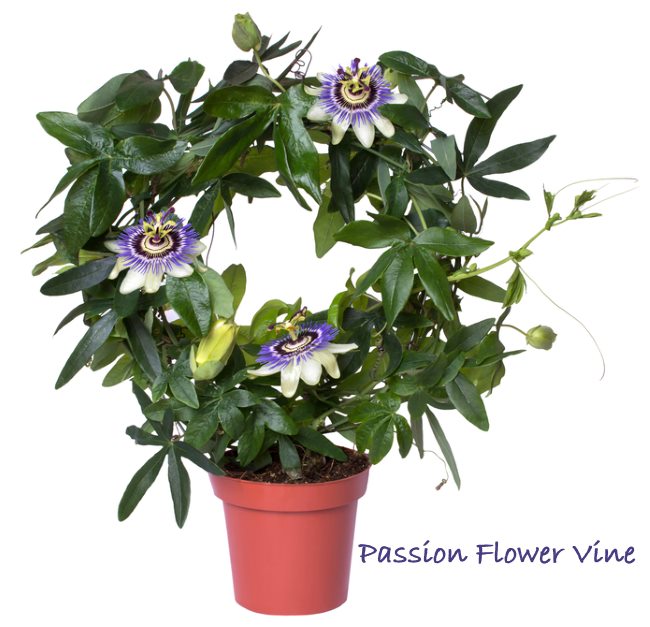 Passion flower's vines grow on a hoop indoors. Photo ©Liudmyla Ivashchenko
How to Prune Passion Vines
Cut the stems back in spring, just before its heaviest blooming time, but be careful not to remove any flower buds. Use sharp pruners to avoid tearing the stems. You can cut stems down to 10-inches (25 cm) long, if you want.
Overwintering Passion Flower Plant
This South American beauty needs a winter rest.
When the flowering season is over, reduce watering and stop fertilizing. Give your plant cooler temperatures, as low as 50°F/10°C during this rest. Low light levels are fine. When spring begins, resume normal care.
When to Repot
Repot young plants in spring, when plants are beginning their most vigorous growth. Older plants can be top-dressed instead, removing the top couple inches (